Lenox Terrace Association of Concerned Tenants
  • Home
  • About
  • Membership
  • Resources
  • Heritage & History
  • More
    • Home
    • About
    • Membership
    • Resources
    • Heritage & History
  • Sign In
  • Create Account

  • My Account
  • Signed in as:

  • filler@godaddy.com


  • My Account
  • Sign out


Signed in as:

filler@godaddy.com

  • Home
  • About
  • Membership
  • Resources
  • Heritage & History

Account

  • My Account
  • Sign out

  • Sign In
  • My Account

A Living Landmark in Central Harlem

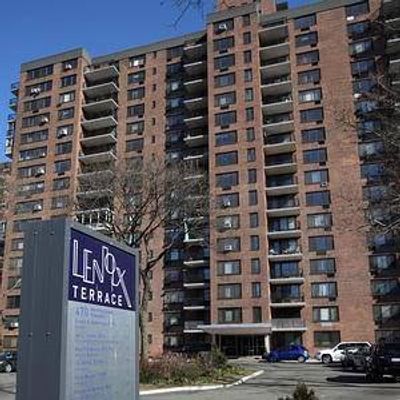
Lenox Terrace stands as one of Harlem’s most historically significant residential communities. Built in 1958 and shaped by decades of cultural, political, and social evolution, it remains a cornerstone of Black middle‑class life and a symbol of Harlem’s resilience, ambition, and identity.


The Lenox Terrace Story

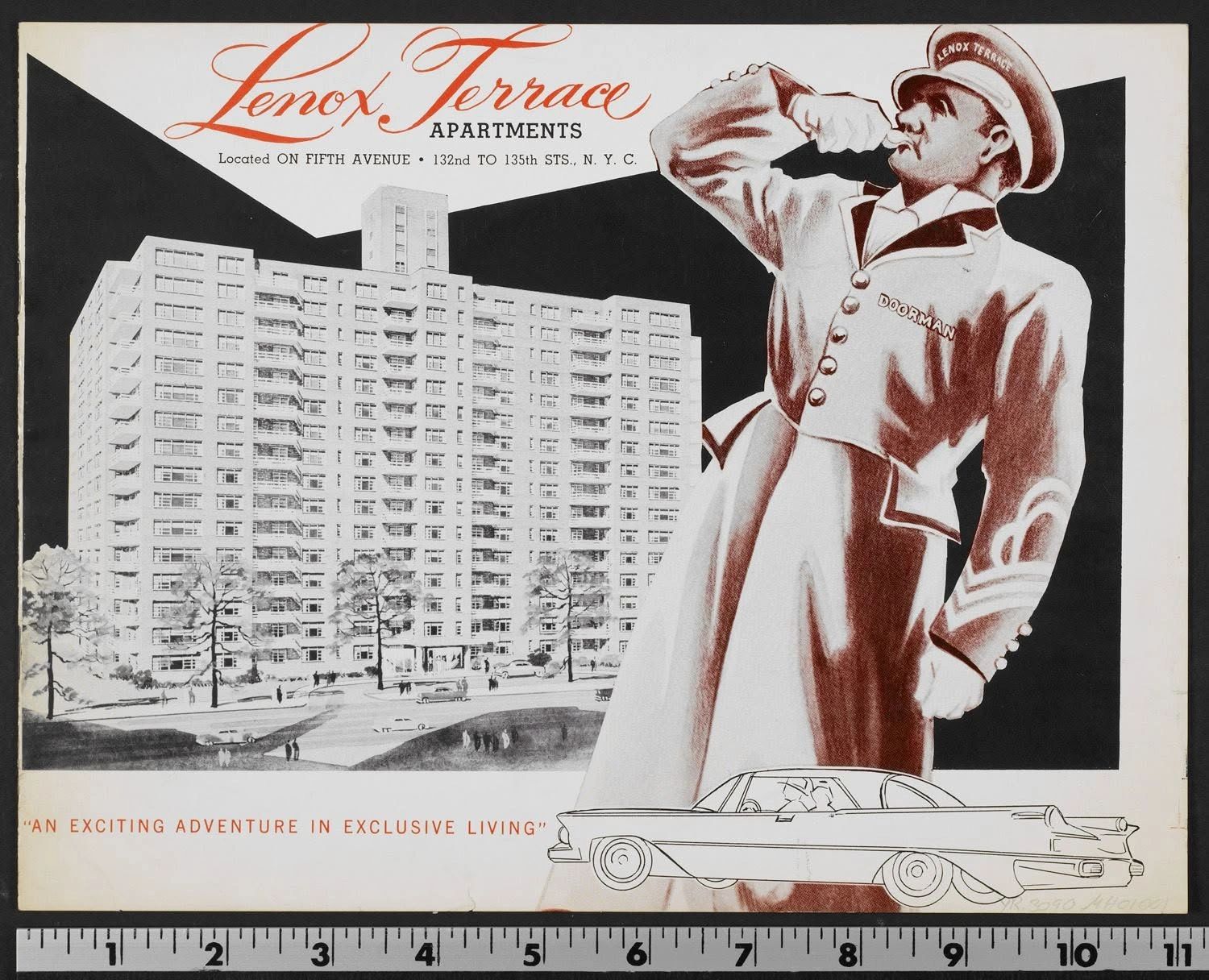
Lenox Terrace was developed during a period of major transformation in New York City. Conceived as a modern “tower‑in‑the‑park” community, it replaced overcrowded blocks with spacious apartments, landscaped grounds, and amenities that were unprecedented in Harlem at the time.


Over the decades, Lenox Terrace became known for its diverse and distinguished residents, its strong tenant advocacy tradition, and its central role in Harlem’s civic and cultural life.


Timeline of Lenox Terrace

1951 — Slum Clearance Plan Announced

City planners identify the blocks between West 132nd and 135th Streets as severely overcrowded and unsafe. A redevelopment plan is approved to create a modern residential superblock.

1958 — Lenox Terrace Opens

Construction is completed on Harlem’s first luxury apartment complex. The development introduces doormen, balconies, landscaped courtyards, and private parking—features never before seen in Harlem rentals.

1960s — A Center of Black Middle‑Class Life

Lenox Terrace becomes home to educators, artists, civil‑rights leaders, and professionals. Its reputation grows as an oasis of stability and upward mobility.

1968 — LT‑ACT Founded

The Lenox Terrace Association of Concerned Tenants (LT‑ACT) is established to advocate for residents, protect quality of life, and ensure accountability from building management.

1970s–1990s — Cultural and Political Influence

Residents include prominent Harlem figures such as Percy Sutton, Charles Rangel, Basil Paterson, Hazel Dukes, Albert Murray, and Danny Brown. Lenox Terrace becomes a hub of civic engagement.

2000s — Preservation and Advocacy

LT‑ACT continues to organize around maintenance, construction impacts, and tenant protections, strengthening its role as a voice for the community.

2010s–Present — Redevelopment Debates

Proposals to add new towers and expand the complex spark major conversations about affordability, density, and the future of Harlem. LT‑ACT plays a central role in representing residents’ interests.

A Community with a Legacy

Lenox Terrace is more than a housing complex it is a living part of Harlem’s cultural fabric. Its residents have shaped the neighborhood’s political leadership, artistic identity, and community activism for more than six decades.


LT‑ACT honors this legacy by continuing to advocate for safe, stable, and thriving homes for all who call Lenox Terrace their own.


⭐ Notable Former Residents of Lenox Terrace

Political powerhouses. Cultural pioneers. Civil rights icons. All part of the Lenox Terrace story

Political & Civil Rights Leaders

  • Percy Sutton — influential Manhattan borough president and member of Harlem’s political dynasty 
  • Charles Rangel — long‑serving U.S. Congressman representing Harlem; noted as a current resident in reporting 
  • Basil Paterson — New York Secretary of State and father of Gov. David Paterson; part of Harlem’s political leadership circle 
  • Hazel Dukes — former NAACP president and major Harlem civil‑rights leader; long‑time Lenox Terrace resident
  • Judge Bruce Wright - Jurist, Served on the New York State Supreme Court
  • Charles McKinney - Scholar, Current Professor of African American History at Rhodes College
  • David Paterson — former Governor of New York; a notable resident involved in Lenox Terrace community issues 

Arts, Culture & Media

  • Danny Brown — trumpeter 
  • Albert Murray — renowned jazz critic and writer 
  • Loretta Mary Aiken -  Comedian "Mom Mabley"

Historic Harlem Figures

  • Ellsworth “Bumpy” Johnson — legendary Harlem figure and bookmaker 

🏛️ Why These Names Matter for LT‑ACT

Lenox Terrace has long been home to Harlem’s political, cultural, and civic leadership. This concentration of influential residents helped shape:

  • A strong tradition of tenant organizing
  • High expectations for accountability from management
  • Deep ties to Harlem’s political ecosystem
  • A culture of community advocacy, which LT‑ACT continues today

Not all of these individuals were formal LT‑ACT officers, but their presences in the complex contributed to the environment that made LT‑ACT a powerful and enduring tenants’ association.

Lenox Terrace Association of Concerned Tenants

P O Box 822 Lincolnton Station New York, NY 1003

info@LTACT.org


Copyright © 2021 Lenox Terrace Association of Concerned Tenants


Created by Zeev Media

This website uses cookies.

We use cookies to analyze website traffic and optimize your website experience. By accepting our use of cookies, your data will be aggregated with all other user data.

DeclineAccept
